COMPREHENSION BASED ON WALKING STICKS, UMBRELLA STICKS AND DISCONNECTED EMOTIONS
Kinetic installation with video projection and live monitors, see captions for materials/technique, 5 x 6 mDeveloped with the generous contribution of biologist Peter Roessingh
BFA Degree show, Gerrit Rietveld Academie, 2008
 Installation detail, drill, sofa pillow in leather imitation, umbrella sticks, TV-rack, monitoring chamber for insects, electronics, monitor with live view of walking stick insects, oscilloscope
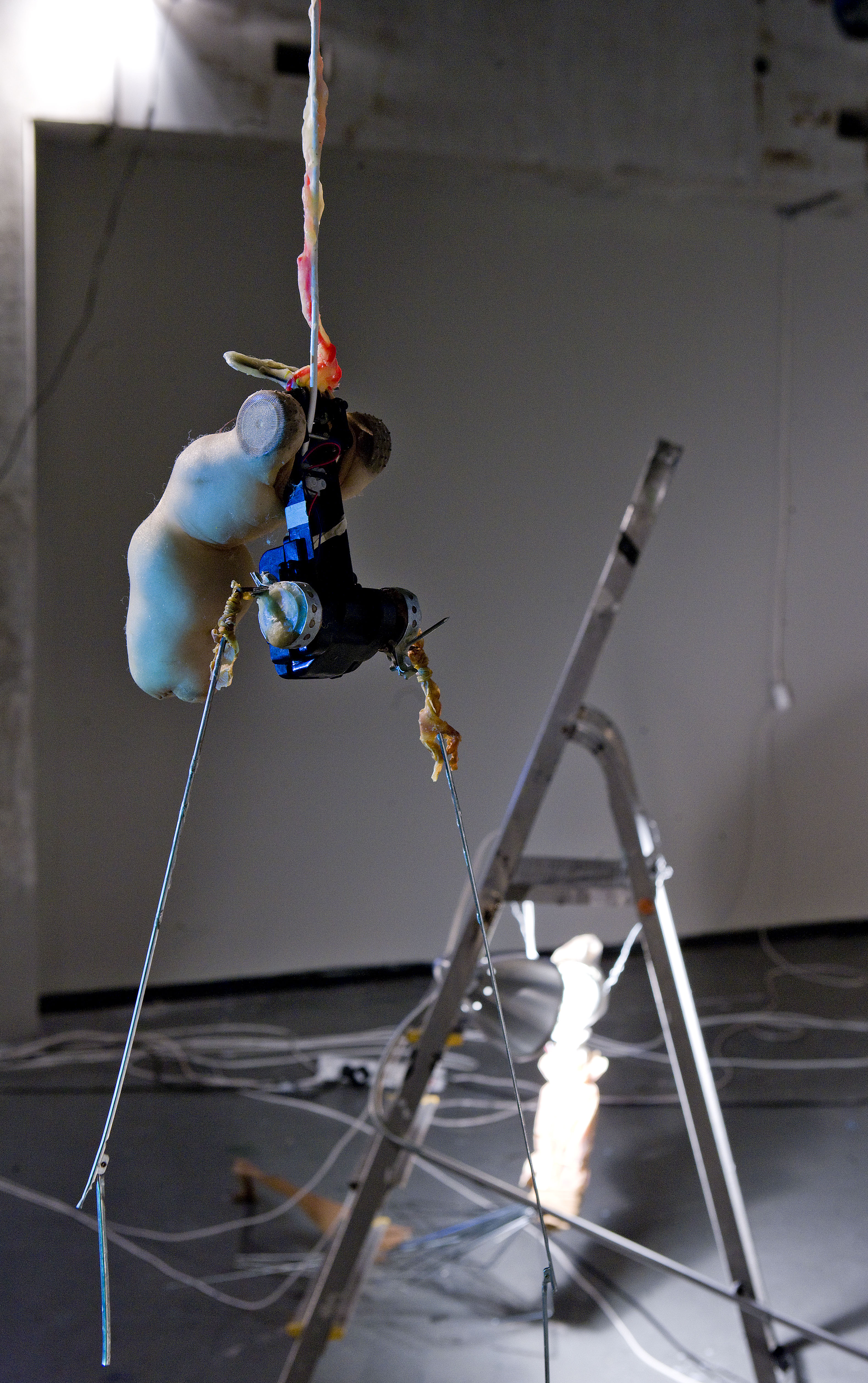 Installation detail, remote controlled car, umbrella sticks, nylon stocking, wadding
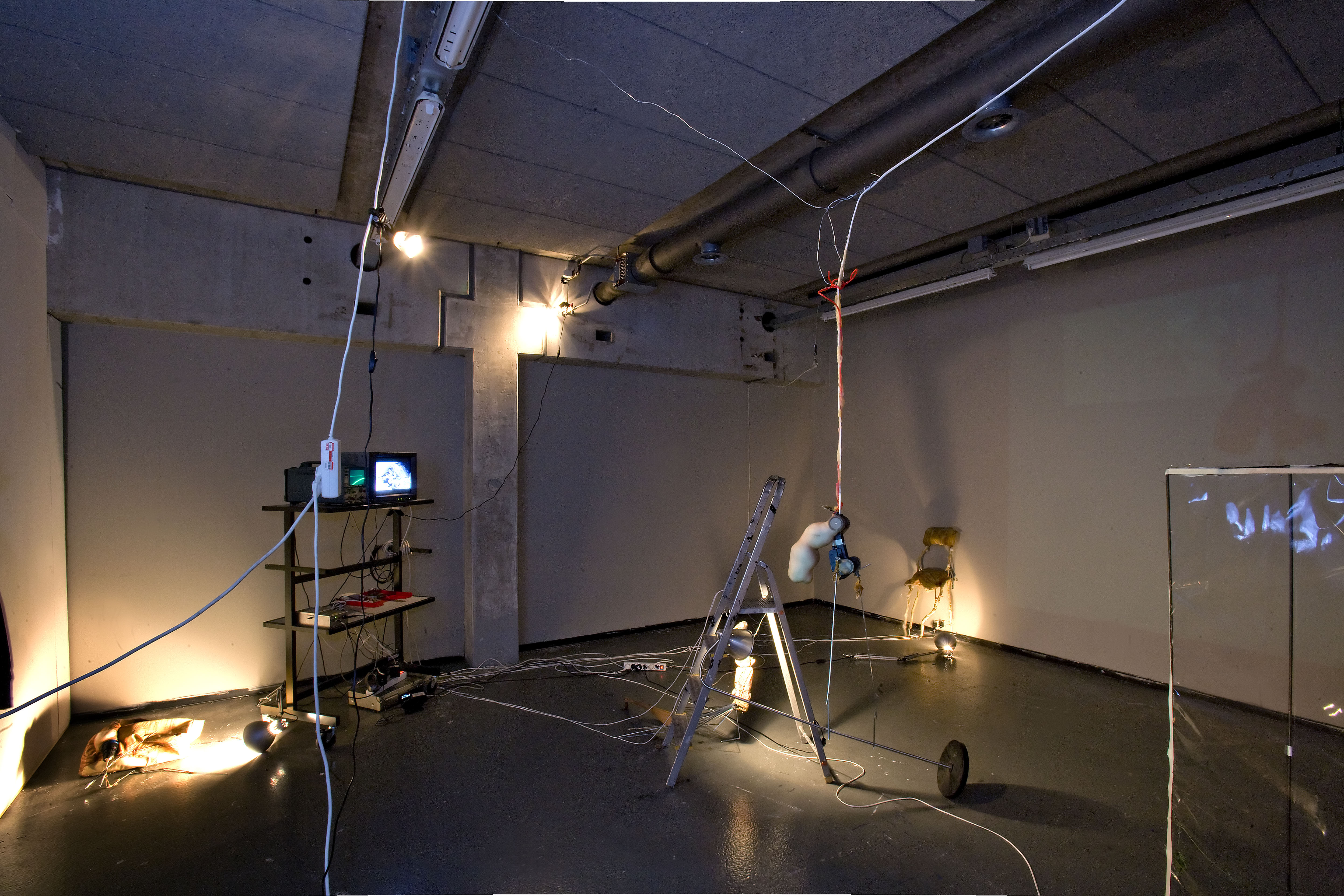 Installation view
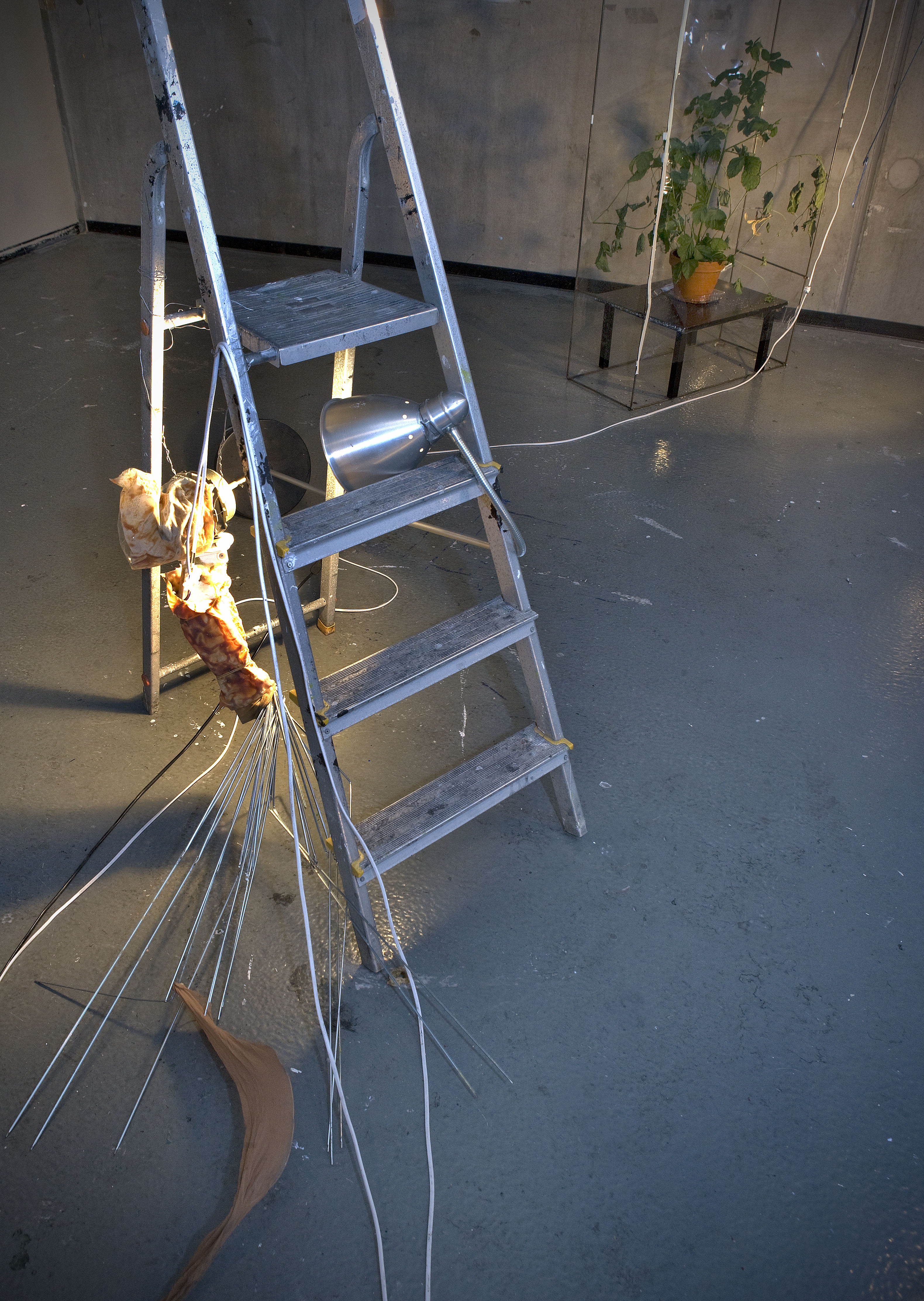 Installation detail, fan, umbrella sticks, nylon stocking, lamp, ladder, blackberry plant, walking stick insects
Video documentation
 Installation detail, chair made from umbrella sticks, latex, wadding, servos
Excerpt of Movement Fragments I, that was projected in the installation, 2 min duration
From the artist book Withstanding the Shatter of Origins: First Excerpt, 2013
Crane flies moving a building crane
I search for a wizard outside my field, with insects in the back of my mind. I have talked to Herman De Jong specialist in Crane Flies, who showed me the insect collection of the Institute for Biodiversity and Ecosystem Dynamics, section Entomology at the University in Amsterdam. I travelled to Universities in the Netherlands to pick up old lab instruments, capable of measuring insect movements, and finally got in touch with a professor in biology Peter Roessingh, specialising in moths, who has electronics and robotics as a hobby. We started to meet regularly.
To begin with he was supposed to help me make crane flies move a building crane. After a lot of efforts from his side, and me realising my lack of interest in electronics, we have managed to create an installation where Giant Prickly Walking Sticks are moving kinetic sculptures. The sculptures are mainly constructed from electronic household equipment found on the streets.
From De jong about the crane flies themselves: Depending on the weather, the first species will appear as adults in April (among them the common species Tipula oleracea). Even better will be May. The best chance to catch crane flies near Amsterdam will be in grassland areas like Waterland to the north-east of Amsterdam (with the villages Durgerdam, Ransdorp, Holysloot etc) or the area to the south along the river Amstel in the direction of Ouderkerk. Another possibility to collect crane flies offers the Amstelpark: in the park there are several shelters with transparent domed roofs that act as insect traps. Here you can easily take the specimens from the underside of the roof. You can borrow an insect net from us if you like; just phone or mail me by the time the crane flies are flying.
The insect was chosen because its movements reminded me of stumbling and weakness. Later I learned that the erratic behaviour actually is a clever trick to escape predators, and probably is the reason why this species is one of the oldest families in the two winged insect family (230 mill. years old).
As children we used to pull off crane fly’s legs. The legs would easily detach from the body, and the crane fly would escape. The remaining leg left spastic on the ground. With a short life on its own.